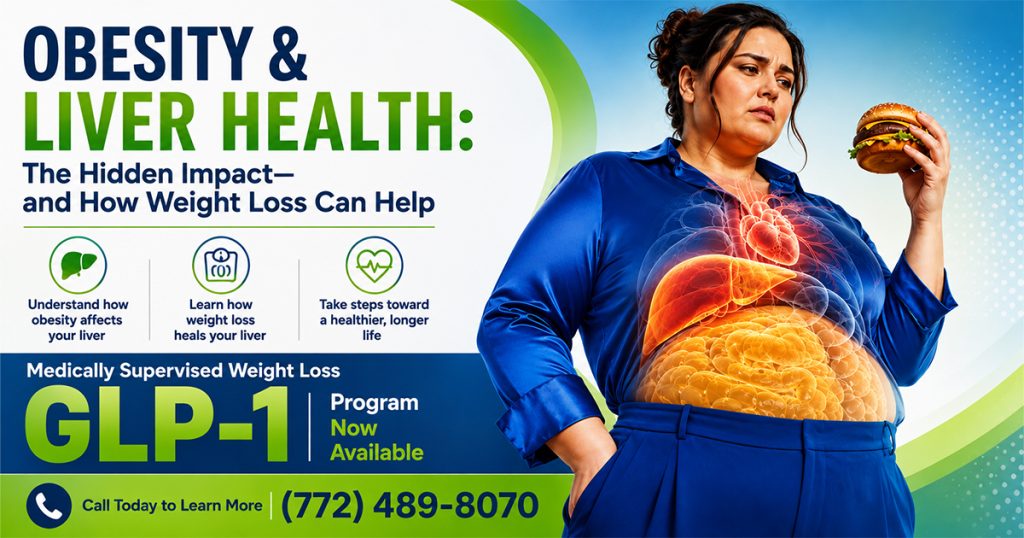
The liver is one of the most remarkable organs in the human body. It performs more than 500 vital functions every day, including filtering toxins from the blood, processing nutrients, regulating blood sugar, producing proteins essential for blood clotting, storing vitamins and minerals, and helping digest fats by producing bile. Because the liver works around the clock, maintaining its health is essential for overall well-being.
Unfortunately, obesity has become one of the leading causes of chronic liver disease in the United States. Today, more than one in three American adults lives with obesity, placing millions at increased risk for serious liver complications that often develop silently, without noticeable symptoms.
Excess body fat, particularly fat stored around the abdomen, can lead to fat accumulation inside liver cells. This condition is known as Metabolic Dysfunction-Associated Steatotic Liver Disease (MASLD), formerly called nonalcoholic fatty liver disease (NAFLD).
n its early stages, fat buildup may cause few or no symptoms. However, if left untreated, the condition can progress to inflammation and liver cell damage, known as Metabolic Dysfunction-Associated Steatohepatitis (MASH) (formerly NASH). Over time, ongoing inflammation may lead to:
- Liver fibrosis (scarring)
- Cirrhosis
- Liver failure
- Increased risk of liver cancer (hepatocellular carcinoma)
In fact, MASLD is now one of the most common causes of chronic liver disease worldwide and a leading reason for liver transplantation.
Your liver is responsible for many life-sustaining functions, including:
- Filtering toxins, medications, and alcohol from the bloodstream
- Regulating blood glucose levels
- Processing cholesterol and fats
- Producing proteins needed for blood clotting
- Storing vitamins A, D, E, K, and B12
- Producing bile to aid digestion
- Supporting immune function
- Helping regulate hormones and metabolism
When the liver becomes overloaded with fat and inflammation, many of these critical functions become less efficient, affecting overall health.
Early liver disease often develops without symptoms. As the condition progresses, individuals may experience:
Because symptoms often appear only after significant damage has occurred, regular medical evaluations are important for individuals with obesity, diabetes, high cholesterol, or metabolic syndrome.
Unlike many chronic diseases, fatty liver disease can often improve significantly with healthy weight loss.
Clinical studies have shown that:
Weight loss also helps improve:
Even modest, gradual weight loss can have meaningful benefits for liver function.
Improving liver health involves long-term lifestyle changes, including:
Working with a healthcare provider can help develop a safe and personalized plan for sustainable weight loss.
For some individuals, lifestyle changes alone may not be enough to achieve meaningful weight loss. Newer medications known as GLP-1 receptor agonists have shown significant promise in helping patients lose weight while improving metabolic health.
Clinical research has demonstrated that GLP-1 medications can:
These medications work best when combined with healthy nutrition, regular exercise, and ongoing medical supervision.
If you are struggling with obesity or are concerned about your liver health, Coastal Primary Care is here to help.
Our medically supervised GLP-1 program includes comprehensive evaluations, individualized treatment plans, nutritional guidance, and lifestyle counseling. Our goal is to help patients achieve sustainable weight loss while improving overall health and reducing the risk of obesity-related diseases—including liver disease.
Healthy weight loss is about more than appearance—it is an investment in the long-term health of your liver, heart, and entire body.
Contact Coastal Primary Care today to learn whether our medically supervised GLP-1 weight loss program is right for you.